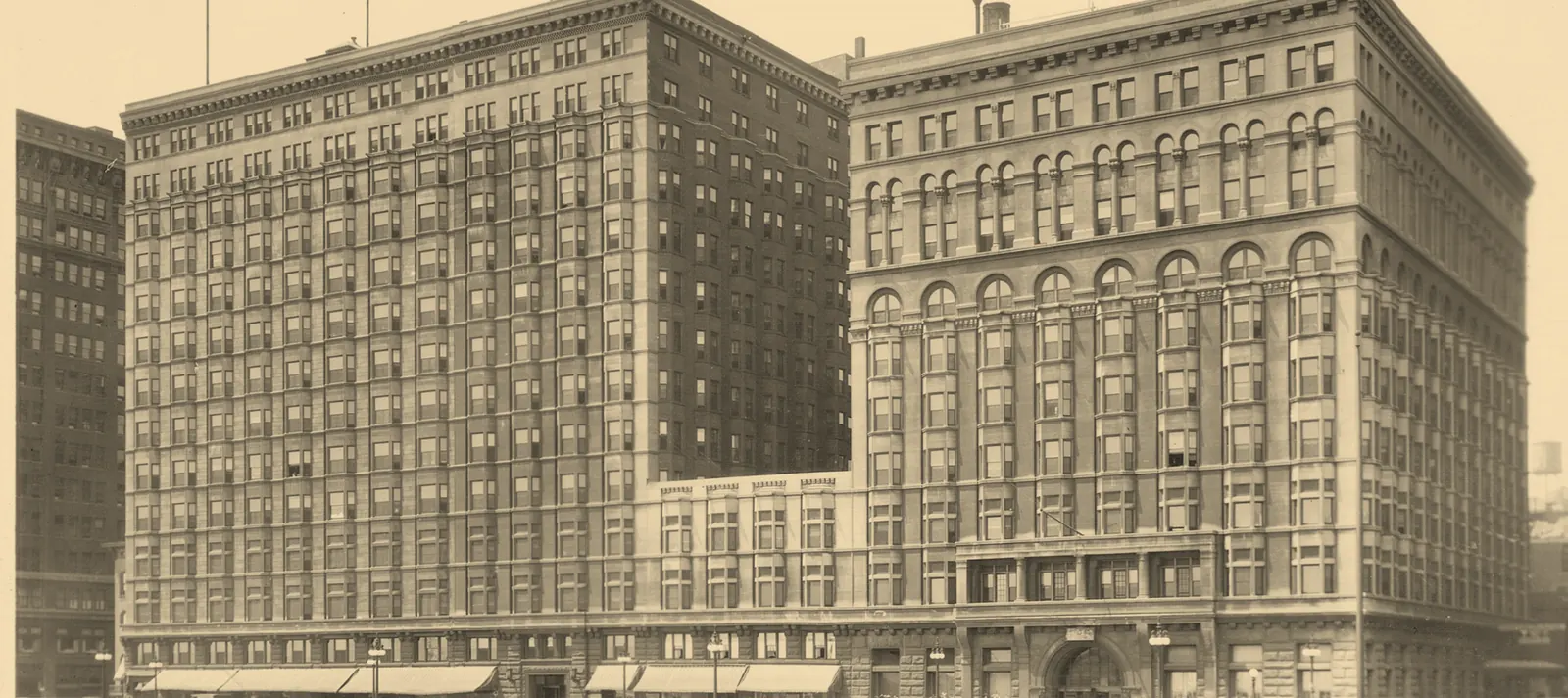
An early photograph of the hotel on Michigan Avenue

Our History

A Chicago Icon Since 1893

Built for the World’s Fair, renamed in 1908, and still across Michigan Avenue from Grant Park.

The world came to Chicago in 1893. This is where it stayed.

For more than 130 years, the Congress has welcomed fairgoers, presidents, bandleaders, soldiers, and families. Here’s how a World’s Fair hotel became a Chicago landmark.

Before the Hotel

How We Got Our Name


Long before there was a hotel here, there was a street. Our name followed it across Michigan Avenue into Grant Park, and you can still walk that same route from our front door.

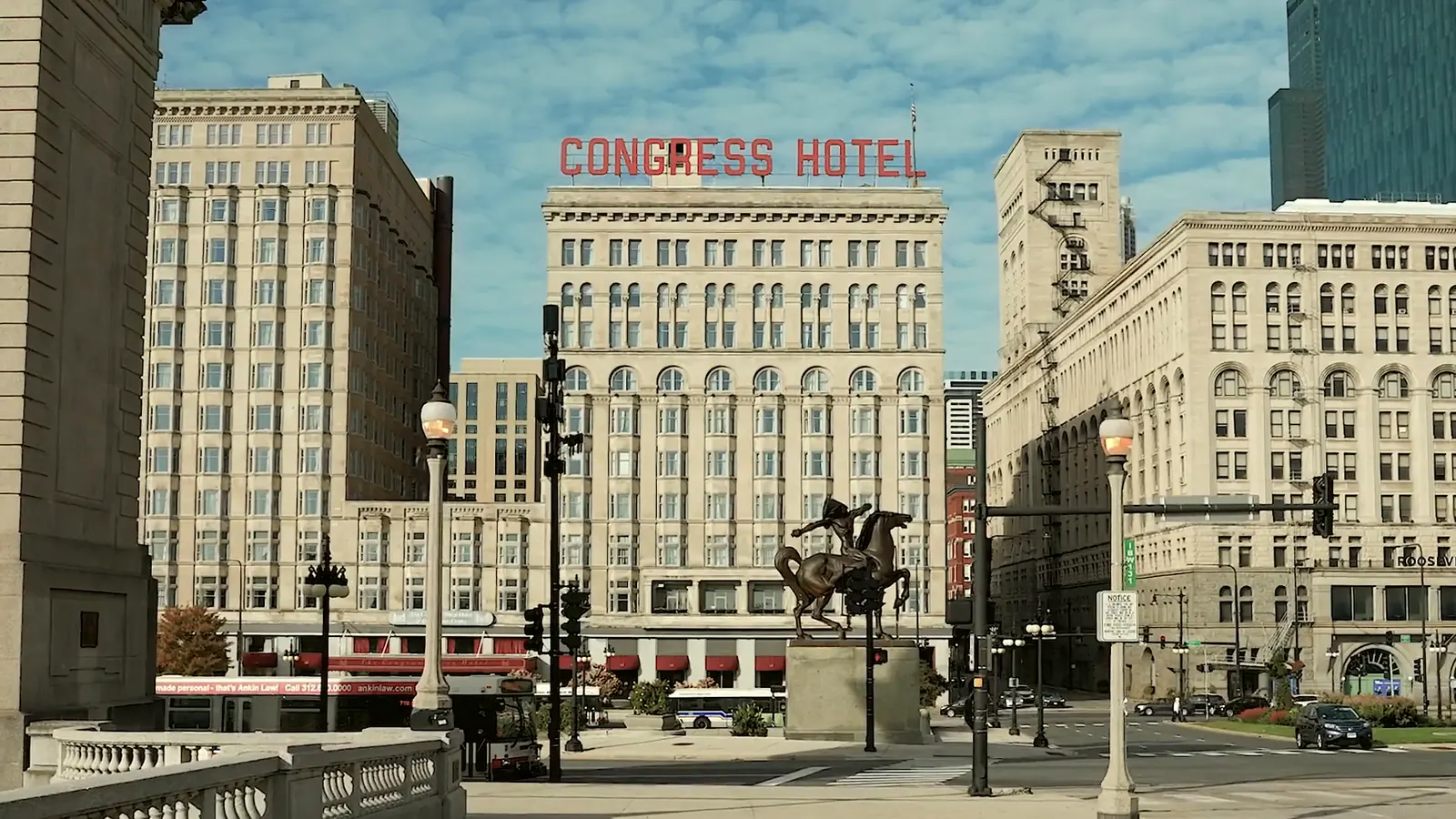
In 1908 the Auditorium Annex took its new name from right outside. The hotel stood on Congress Street, beside the Congress Plaza section of Grant Park, so it became the Congress Hotel, and in time the Congress Plaza Hotel.

The plaza is still there. Step out our door, cross Michigan Avenue, and walk between the Bowman and the Spearman: you’re standing in the place that gave us our name.

The Spearman statue at Congress Plaza, with the CONGRESS HOTEL sign behind

From a Street to a Plaza

Three Steps to “Congress”

1872

A New Name for the Street

The street outside was first named Tyler Street, for President John Tyler. In 1872 the City Council renamed it Congress Street. The council’s records don’t say why, but Tyler was the only former president to side with the Confederacy.

1909

Burnham’s Grand Axis

Daniel Burnham and Edward Bennett’s 1909 Plan of Chicago made Congress Street the city’s central axis, running from Grant Park on the lakefront west to a grand new civic center.

1928

The Plaza Takes Shape

Bennett went on to design Congress Plaza, the park entrance at the foot of Congress Street, with its stairs, fountains, and gardens. In 1928 Ivan Meštrović’s Bowman and Spearman took their places on either side.

1893

The Auditorium Annex

The hotel opened as the Auditorium Annex to house the crowds arriving for the World’s Columbian Exposition. Developer R. H. Southgate built it, and Clinton J. Warren designed the north tower across Congress Street from Adler & Sullivan’s Auditorium Building.

A marble-lined passage under the street, known as Peacock Alley, connected the annex to the Auditorium Hotel next door.

The Auditorium Annex in an early photograph
The Annex on Michigan Avenue, facing the lakefront.
1907

The South Tower

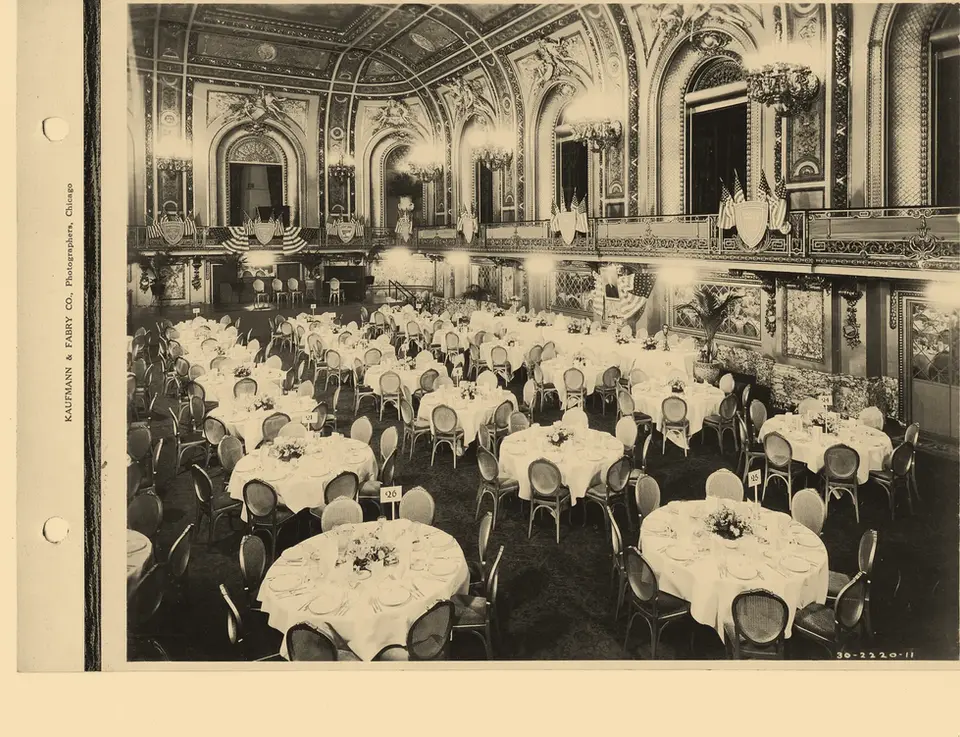
Between 1902 and 1907 the architects Holabird & Roche added the south tower and a grand banquet hall, one of the first ballrooms in America to be air-conditioned. By 1908 the hotel had more than 1,000 guest rooms.

A banquet set in the hotel's ballroom in the early 1900s
A banquet in the new ballroom.
1908

The Congress Hotel

The Annex took a new name from its address: the Congress Hotel, on Congress Street beside the Congress Plaza section of Grant Park (how the name came to be). Within a few years electric outlets and desk lamps replaced chandeliers in the guest rooms.

An early sign for the Congress Hotel and Annex
The Congress Hotel and Annex sign, listing its dining rooms.
1912

A Rough Rider in Residence

In June 1912, with the Republican National Convention in town, Theodore Roosevelt made the Congress his Chicago home. He was one of many presidents to stay, which is how the hotel came to be called the “Home of Presidents” (see who stayed).

A banquet hall hung with flags and bunting
A banquet hung with flags and bunting.
1918

The Florentine Ceiling

The painter E. Martin Hennings covered the Florentine Room’s barrel-vaulted ceiling with murals. More than a century later, couples still say their vows beneath them.

Weddings in the Florentine Room

The painted barrel-vaulted ceiling of the Florentine Room
The Florentine Room’s painted ceiling today.
1935

Swing on the Radio

In the 1930s the former Elizabethan Room became a nightclub with a bandstand. In 1935 it was the stage for an NBC radio show featuring Benny Goodman, broadcasting from the hotel to the country.

The hotel's nightclub room in the 1930s
The nightclub room, ready for the band.
1940s

In Service

When World War II began, the government bought the hotel for the Army. It reopened to civilian guests in 1944 and was soon busy again with summer political conventions.

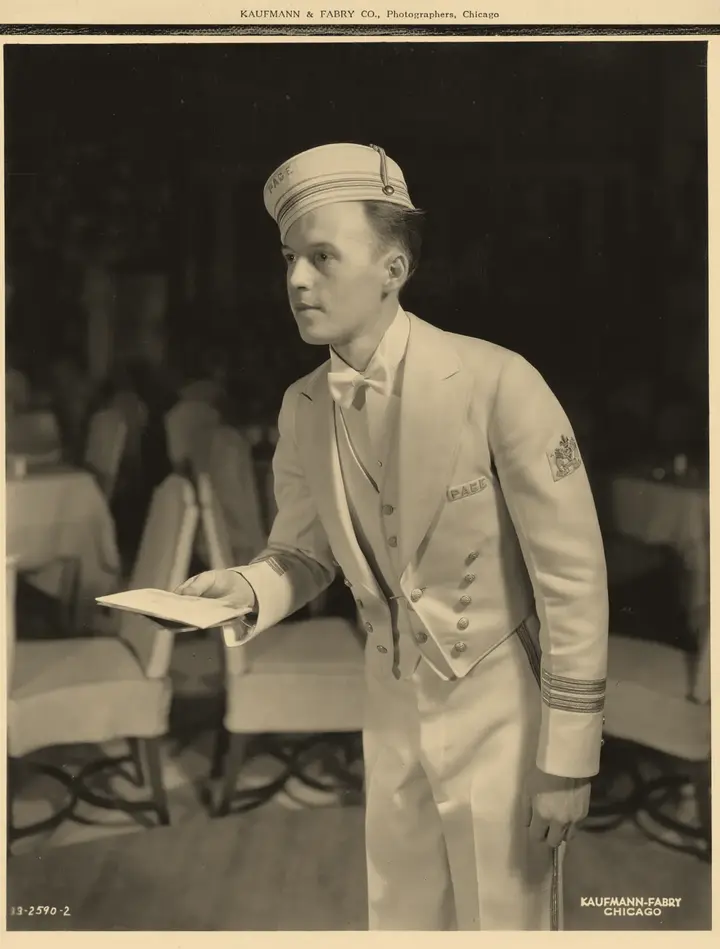
A hotel bellman in uniform
A bellman in the hotel’s livery.
1950

The Pick-Congress

Pick Hotels bought the hotel in 1950, and it became known as the Pick-Congress. A remodel from 1950 to 1952 created a mural-encircled lobby and a new front desk, new Congressional and Presidential Suites, and a supper club called the Glass Hat. In 1952 Albert Pick Jr. commissioned new murals from the painter Louis Grell.

Painted arches above the front desk in the lobby
The lobby’s painted arches above the front desk.
1960s

Modern Conveniences

A second modernization in the early 1960s built a new ballroom and added escalators, still a novelty for hotels at the time. Conventions, proms and banquets filled the event floors.

Today’s event spaces

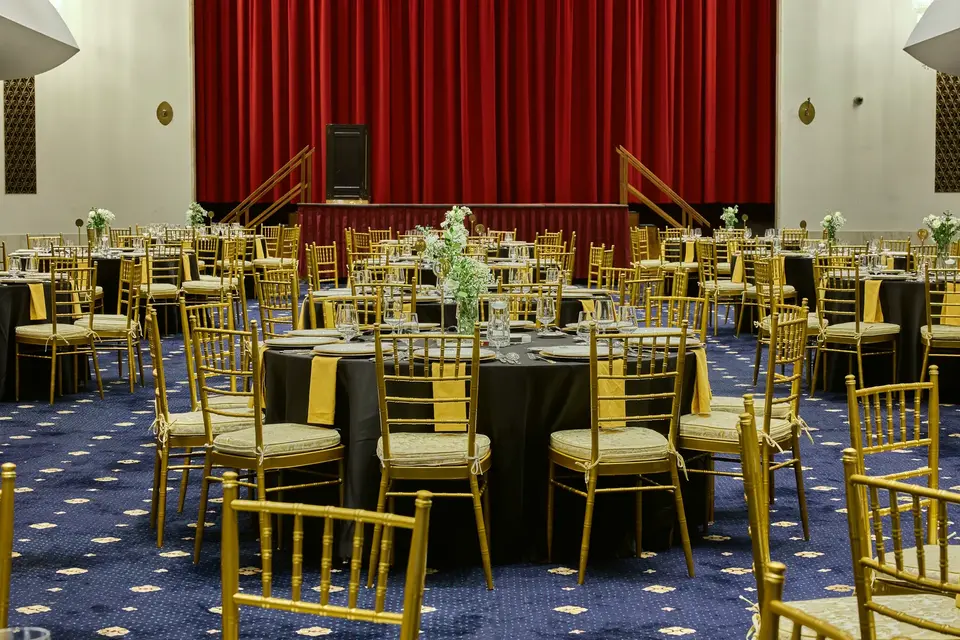
The Great Hall set for a banquet
The Great Hall today.
1987

Independent

The hotel changed hands in 1987 and ran independently for nearly four decades, outside the national chains, keeping its own name and its own character.

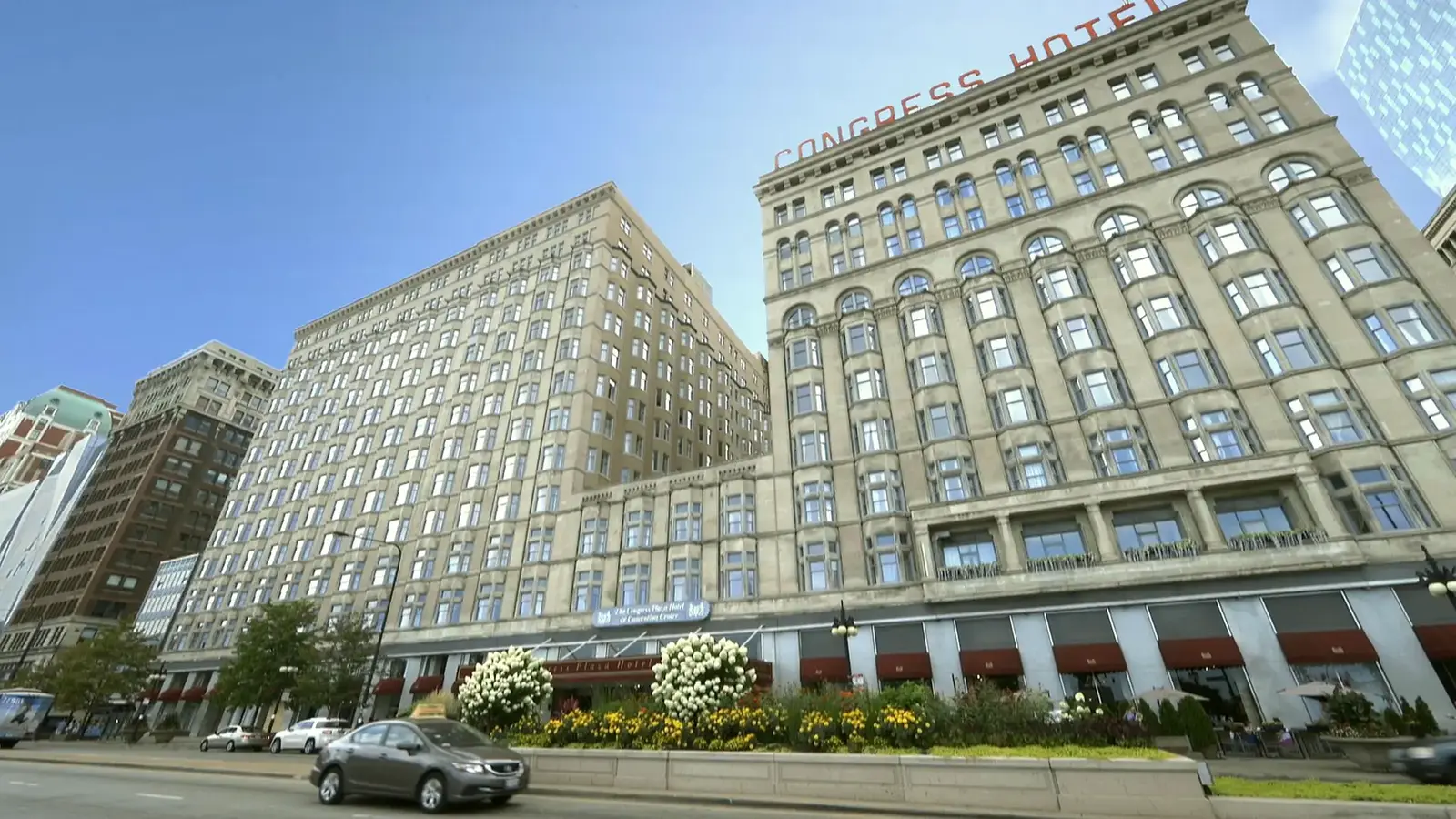
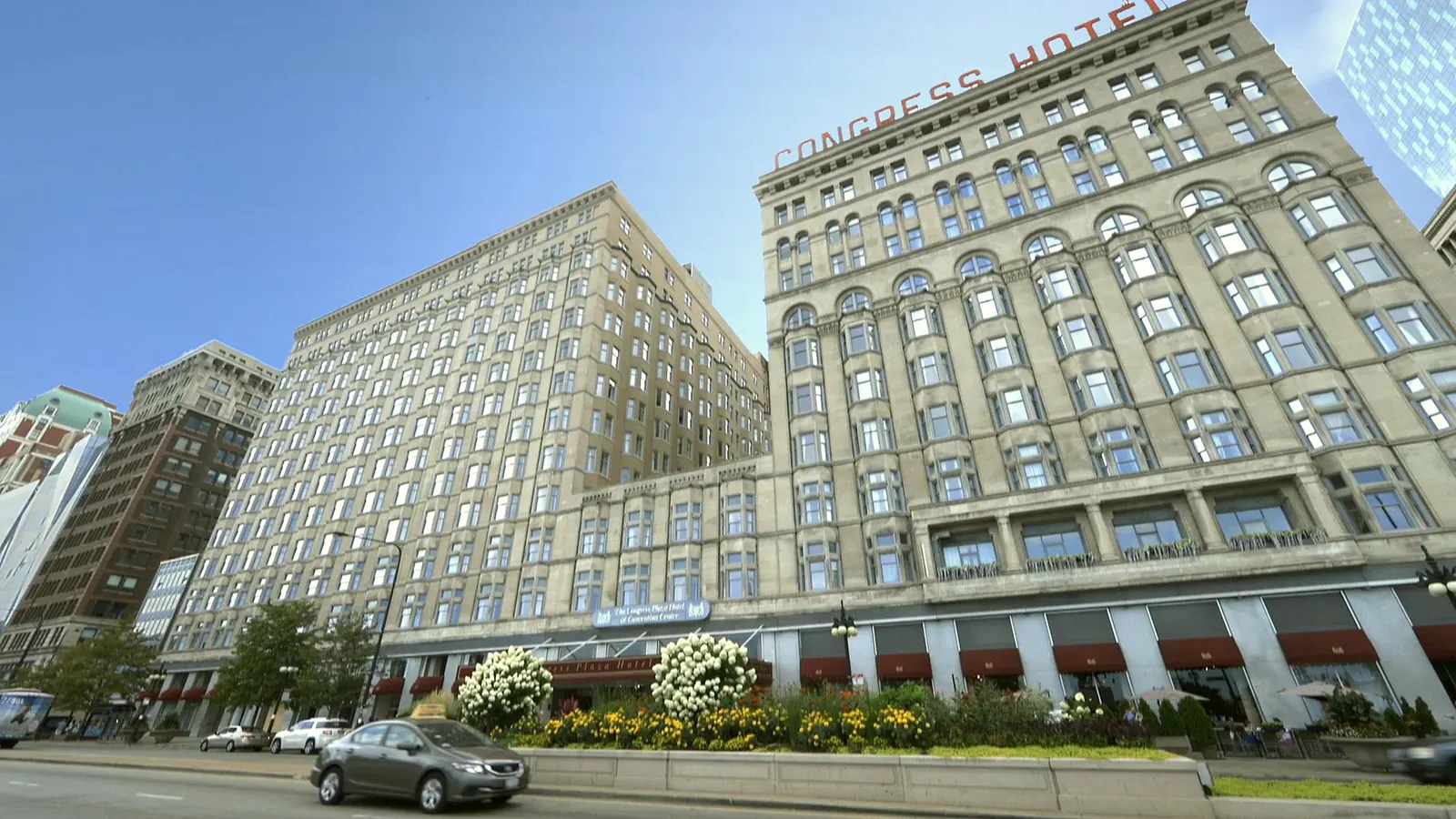
The hotel's Michigan Avenue facade
The Michigan Avenue facade.
2018

125 Years on Michigan Avenue

The hotel reached 125 years at 520 South Michigan Avenue: the same address, the same view of Grant Park, and the same red sign on the roof.

The red CONGRESS HOTEL rooftop sign at sunrise
The rooftop sign over Michigan Avenue.
2026

A Wyndham Hotel

In 2026 the Congress Plaza Hotel joined the Wyndham hotel brand, opening a new chapter for a hotel that has welcomed guests on Michigan Avenue since 1893. The address and the view across the street to Grant Park stay the same.

The hotel's three buildings on Michigan Avenue under the red CONGRESS HOTEL sign
The Michigan Avenue front today.
Today

Congress Plaza Hotel

More than 800 rooms, newly renovated guest rooms alongside the classic ones, the mosaic lobby, the Gold Room and the Florentine Room, and the same address across from Grant Park. The ceilings still rise up to 14 ft.

See the Rooms

The mosaic arches of the lobby today
The lobby today.

Home of Presidents

Who Slept Here

So many presidents stayed at the Congress that it became known as the “Home of Presidents.”

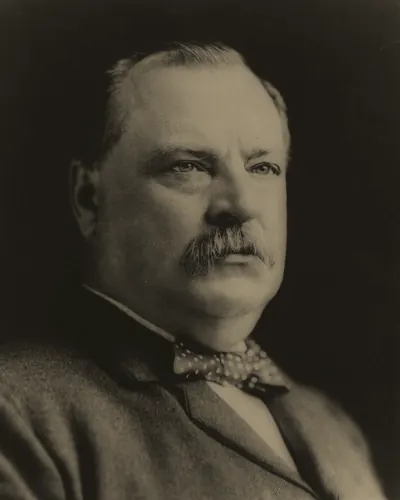
  • Portrait of Grover Cleveland

    Grover Cleveland

    22nd & 24th President · 1885–1889, 1893–1897

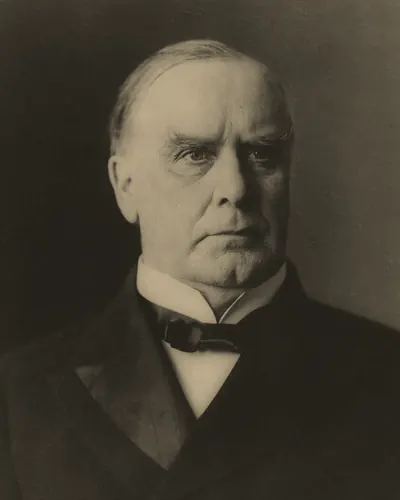
  • Portrait of William McKinley

    William McKinley

    25th President · 1897–1901

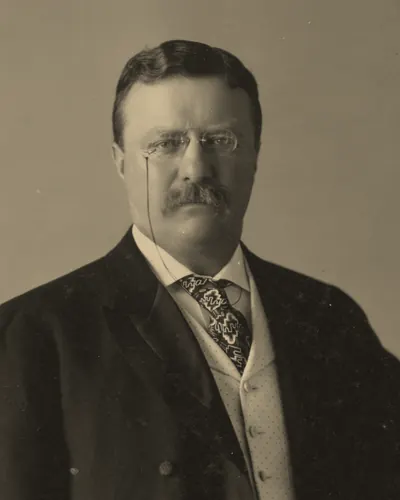
  • Portrait of Theodore Roosevelt

    Theodore Roosevelt

    26th President · 1901–1909

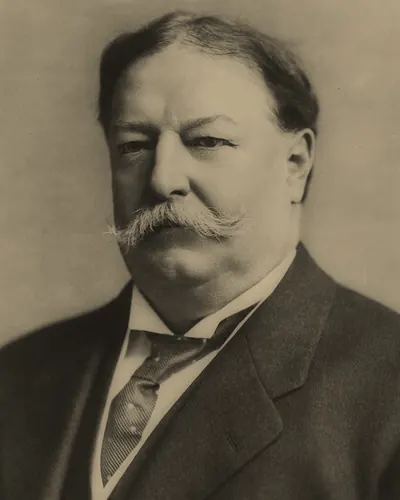
  • Portrait of William Howard Taft

    William Howard Taft

    27th President · 1909–1913

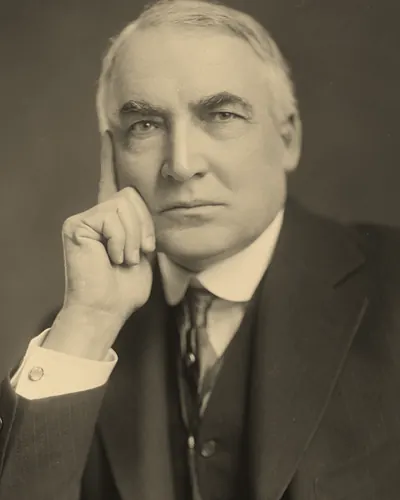
  • Portrait of Warren G. Harding

    Warren G. Harding

    29th President · 1921–1923

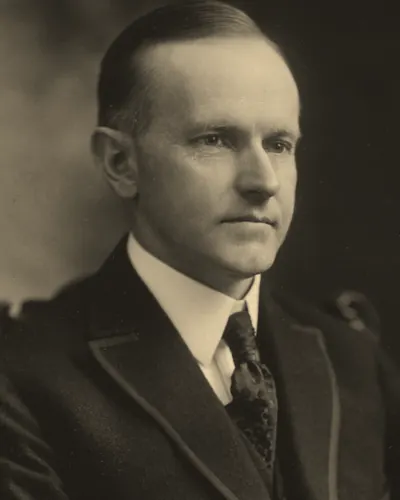
  • Portrait of Calvin Coolidge

    Calvin Coolidge

    30th President · 1923–1929

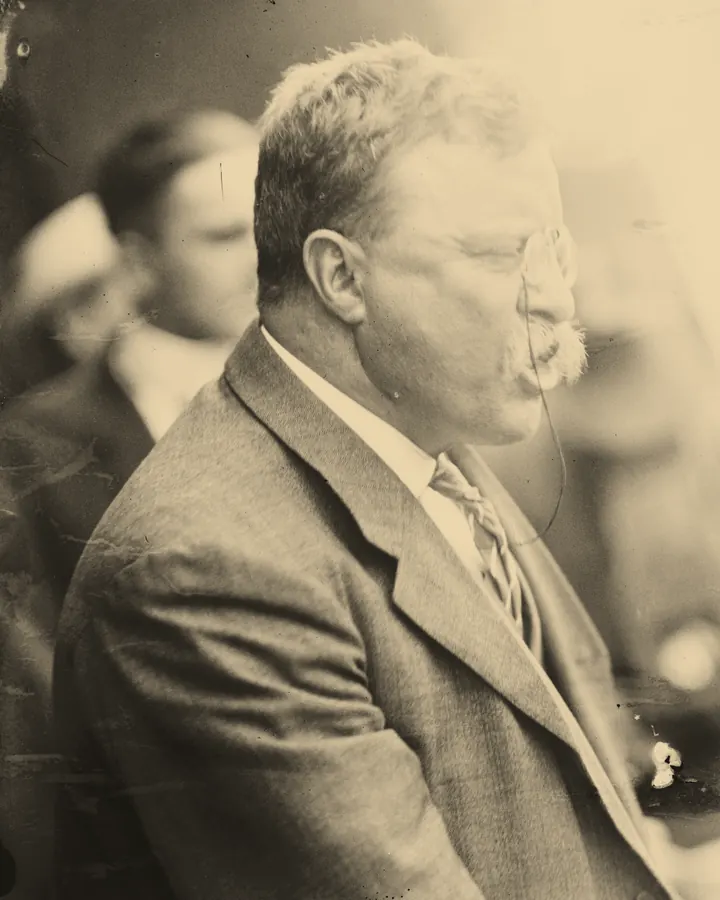
Theodore Roosevelt, in profile, speaking from the Congress Hotel

Seen at the Congress

T.R. at the Congress

Theodore Roosevelt speaking from the Congress Hotel, photographed by the Bain News Service, most likely during the 1912 Republican National Convention, when he made the hotel his Chicago headquarters.

1912 on the Timeline

Photos: Library of Congress, Prints & Photographs Division · Cleveland (1892), McKinley (c. 1900), Roosevelt (Pach Brothers, 1904), Taft (1908), Harding (Harris & Ewing), Coolidge (Notman Studio, 1919), Roosevelt at the Congress (George Grantham Bain Collection)

Guests & Legends

Famous Faces

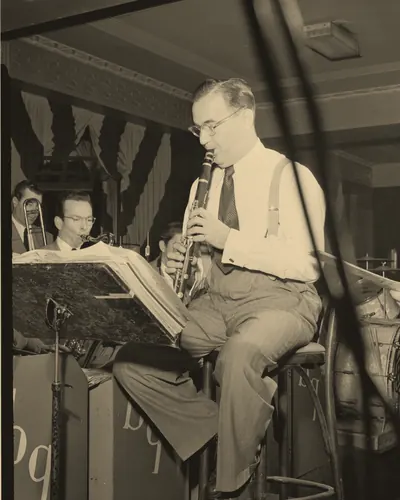
Benny Goodman playing clarinet in front of his band
1935–1936 · The Urban Room

Benny Goodman

Booked into the hotel’s Urban Room for a month in November 1935, Goodman’s band drew such crowds that the hotel kept it on into 1936, and its nightly NBC broadcasts from the room carried swing across the country.

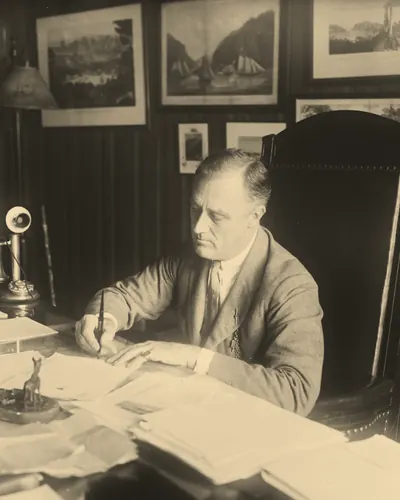
Franklin D. Roosevelt writing at his desk in 1932
1932 · Franklin D. Roosevelt

The 1932 Convention

When the Democrats met in Chicago in 1932, Jim Farley ran Franklin D. Roosevelt’s campaign for the nomination from a suite at the Congress. Time magazine covered the dealing under the headline “Congress Hotel Deal.”

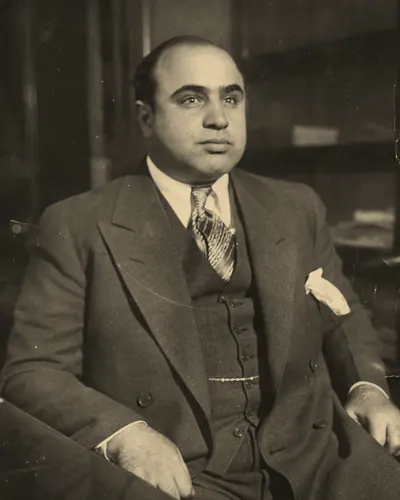
Al Capone, seated, in a three-piece suit
Legends & Lore · Suite 400

Al Capone

Every grand Chicago hotel has a Capone story, and ours is a good one. As it’s told, Scarface kept Suite 400 and had its bathroom refitted with an escape route into the tunnels beneath the city.

Photos: Benny Goodman (William P. Gottlieb, 1946), Franklin D. Roosevelt (Harris & Ewing, 1932), Al Capone (Wide World Photos, 1930)

From the Archive

Then & Now

Be Part of the Story

Stay Where Chicago Has Stayed

Pick your dates and reserve a large room in a Chicago landmark.